
A clickable link in your Instagram Story is one of the most direct ways to send engaged viewers straight to a website, product page, or landing page, no “link in bio” detour required, and no extra friction between interest and action. This guide walks through exactly how to add and optimize a story link sticker, and how to fix underperforming link stories that aren't driving the traffic they should be.
Adding a Link Sticker to Your Story
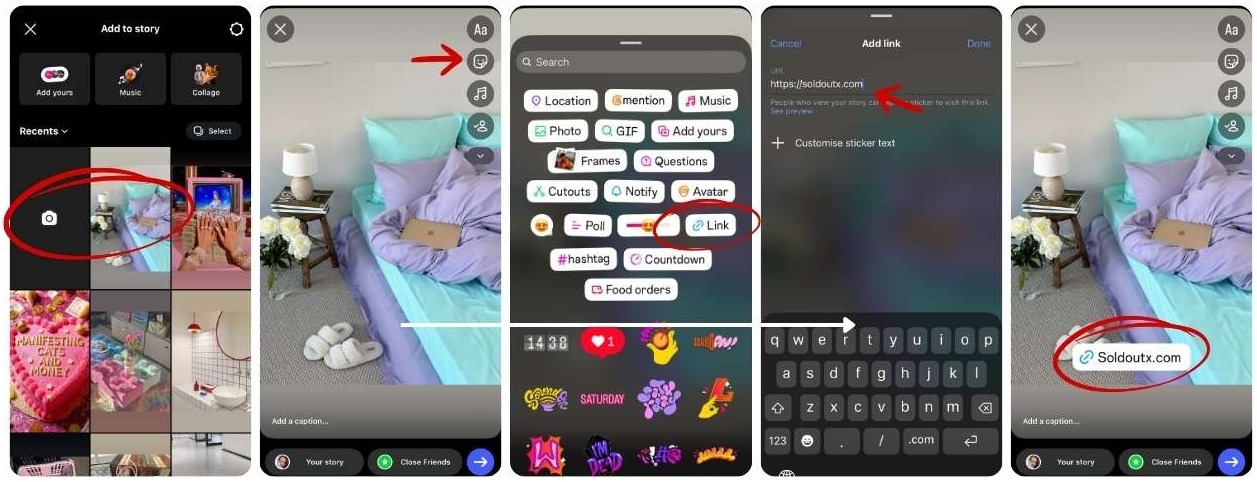
Open the Stories camera, capture or upload your content, then tap the sticker icon and select the Link sticker from the available options. Paste your destination URL, customize the sticker text so it's immediately clear what viewers will get by tapping, and place it somewhere on the frame where it won't be cut off by the interface or hidden behind other elements on screen.
Designing a Story That Earns the Tap
The link sticker needs context to actually convert, and this is where most creators leave easy traffic on the table. Use the visual frame around the sticker to explain, in just a few words, exactly what's waiting on the other side: a discount, a new post, a product drop, a free resource. A link with no surrounding explanation gets ignored even by people who would genuinely have clicked given the right framing and a clear reason to.
Placement and Timing on the Story
Place the sticker in the lower two-thirds of the screen, away from the close button and reply bar where accidental taps and dismissals tend to happen. Resize it small and unobtrusive rather than letting it dominate the frame, which can feel pushy and reduce overall story completion rates. If you're using multiple stickers on the same frame, add the link last in your layering so it doesn't get visually buried under polls, questions, or hashtags.
Building a Multi-Story Sequence Toward One Link
Rather than dropping a link on a single isolated story, consider building a short two- or three-story sequence that builds context and curiosity before the link appears. A teaser frame, a value frame explaining the offer, then the link frame itself. This structure consistently earns more taps than a single story trying to do all three jobs at once.
Tracking Link Click Performance
Instagram Insights shows tap-through counts on link stickers for professional accounts, letting you compare which story formats, frame designs, and calls-to-action drive the most clicks over time. Use this data deliberately to refine your sticker copy, placement, and surrounding context on future stories rather than guessing at what works.
A/B Testing Your Link Sticker Copy
Try two different versions of your link sticker text across similar stories: one focused on urgency (“limited time”), one focused on curiosity (“you need to see this”). Then compare tap-through rates over several attempts using Insights. Small wording changes on the sticker itself often produce a noticeably different click-through rate, and this kind of lightweight testing compounds into a much stronger sense of what genuinely resonates with your specific audience over time.
Using Link Stickers for Different Business Goals
A link driving to a product page needs different surrounding context than one driving to a blog post or a lead-generation form. Product links perform best paired with a clear, specific benefit or limited-time incentive. Content links perform best paired with a curiosity gap that the linked content resolves. Lead-generation links perform best when the value exchange (what the viewer gets in return for their information) is stated plainly before they ever reach the link itself.
Combining Link Stickers With Other CTAs
A link sticker doesn't have to be the only call-to-action in a story sequence. Pairing it with a poll or question sticker earlier in the sequence increases overall interaction with the story frame-by-frame, which can indirectly support how the story performs and how many people actually reach the link frame at all, rather than dropping off partway through the sequence.
If a story with an important link isn't getting the traffic you expected, a low overall view count is often the underlying cause rather than the design or copy itself. Fewer eyes on the story simply means fewer opportunities for a tap, regardless of how well the link is positioned. Choosing to buy Instagram link clicks directly addresses that gap by driving real traffic through to your destination URL, particularly useful for time-sensitive promotions or launches where you can't wait for organic reach to build.
Mistakes That Reduce Link Click-Through Rates
A Simple Example Scenario
A small online shop launching a limited-time discount might post a single story with a link sticker and minimal context, generating only a handful of clicks. Restructuring the same promotion into a short sequence: a teaser frame hinting at a surprise, a value frame revealing the discount percentage and urgency, then a clearly labeled link frame, typically produces a noticeably higher tap-through rate from a similarly sized audience, simply because each frame does one clear job instead of asking viewers to absorb everything at once.
Mobile Design Considerations for Link Stickers
Most viewers see your story on a phone screen, often with one hand and limited attention, so the sticker's tap target needs to be comfortably reachable and legible at a glance. Avoid placing it too close to the very edge of the frame, and test how it looks on both a small and large phone screen before publishing, since a design that looks fine on one device can crowd the interface or get partially obscured on another. When in doubt, preview the story on an actual phone rather than relying only on the in-app editor preview, which doesn't always reflect exactly how the final story renders for viewers.
Rather than adding a link sticker as an afterthought whenever you happen to have a story idea, plan link-driving stories deliberately around your broader content and promotional calendar: product launches, seasonal offers, new blog posts. This ensures each link story has a clear, specific purpose and a natural surrounding context, rather than feeling like a random, disconnected sales attempt dropped into an otherwise unrelated story sequence.
- Adding the link sticker with no surrounding context explaining what it leads to.
- Placing the sticker too close to the close button, where accidental dismissals are common.
- Using a single story to try to explain, sell, and link all at once.
- Never checking Insights to see which link sticker designs actually drive the most taps.
- Posting the link story outside your audience's typically active hours.
Key Takeaways
💡 A clickable link sticker sends engaged viewers directly to your destination, skipping the bio-link detour entirely.
💡 Surrounding context — explaining what's on the other side — is the biggest driver of click-through rate.
💡 A short multi-story sequence that builds curiosity before the link consistently outperforms a single all-in-one story.
💡 Track tap-through data in Insights to refine sticker copy and placement over time.
💡 A views or link-clicks boost can help an important promotional story reach its intended traffic goal faster.
Frequently Asked Questions
Do I need a certain number of followers to use link stickers?
No, the link sticker is available to all professional accounts regardless of follower count, unlike the older swipe-up feature it replaced, which had a follower threshold.
How many stories should lead up to a link?
A two- or three-story sequence that builds context before the link generally outperforms a single story trying to explain everything and ask for the tap simultaneously.
Does buying link clicks help with organic reach too?
It primarily drives direct traffic to your destination URL rather than improving organic story reach, though a story with strong overall engagement can indirectly perform better in general.
What's the biggest factor in link sticker click-through rate?
Clear context. A specific, benefit-driven explanation of what's on the other side of the link consistently outperforms a vague or generic call to action.
Is it worth A/B testing link sticker wording?
Yes — small wording changes on the sticker itself can meaningfully shift tap-through rates, and testing a couple of variations over time reveals what genuinely resonates with your specific audience, information that becomes more valuable the more consistently you apply it across future campaigns.
Should product links and content links use the same approach?
No, product links perform best with a clear benefit or incentive, while content links perform best when the surrounding story creates a curiosity gap that the link resolves.
How many link stickers can I use in one story sequence?
Technically several, but a single, clearly framed link per sequence tends to convert better than spreading a viewer's attention across multiple competing calls-to-action, since each additional link tends to dilute focus rather than adding meaningful incremental value.
A well-designed story link, used consistently and with clear surrounding context, can become one of the most reliable traffic sources available to a growing Instagram account far more direct than waiting for someone to find a link buried in your bio, and easy to strengthen further with a well-timed traffic boost when the moment genuinely calls for it.
Continue reading with these related articles and discover more tips, guides, and insights.